Success case
Open Source Gears to Conserve the Marine Ecosystem: Hong Kong’s Marine Litter Detective Project Developed by MakerBay, WWF & Seeed
Marine Litter Detective is a GPS-tracking device for monitoring marine pollutants, such as plastics and oil spills. This was developed by WWF Hong Kong in cooperation with MakerBay and Seeed. As a result, this Project has enabled the tracking of the origins and whereabouts of trash floating on the water surface (and inside the marine ecosystem), which disclosed how the marine litter ends up in the ocean from the land. Consequently, the Project can positively influence the UN’s SDGs 14, 6, 3, 17, 13, 11, 12, 4, 9 and 16.
- Industry
- Environment & Sustainability
- Region
- Hong Kong (Multi-Point Marine Deployment)
- Application
- Marine Litter Path Tracking
Project background and needs
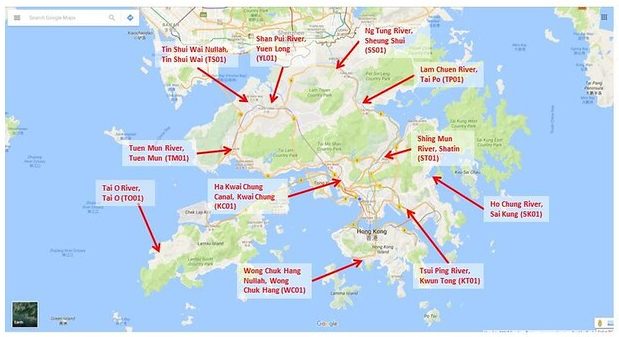
WWF Hong Kong, MakerBay, and Seeed ran a marine litter detective project in Hong Kong, in which students threw devices into rivers and drains to record drift paths and share the data.
Unclear Litter Paths
- The project aimed to track the origins and whereabouts of marine litter.
- Debris entering the water from land keeps moving.
Needed to record drift paths to observe how litter enters the ocean.
Long-Term Observation and Participation
- Marine pollution monitoring requires long-term observation data.
- The project had students deploy devices at multiple locations and share the data.
Needed an observation tool that is easy to build, deploy, and reuse.
Solution and architecture
Drift Terminal
A wax ball houses a battery, LoNet module, GSM antenna, and GPS sensor, providing location data at regular intervals.
Path Research
Students deploy devices in rivers and drains, and the team uses the tracked paths to study where litter comes from, where it goes, and how it moves.
Solution components
- GPS Tracker
- LoNet SIM Card Module
- GSM Antenna
- Battery Pack
On-site gallery (1)
Discuss your application with our team
Tell us about your requirements and deployment environment.