 Scenario
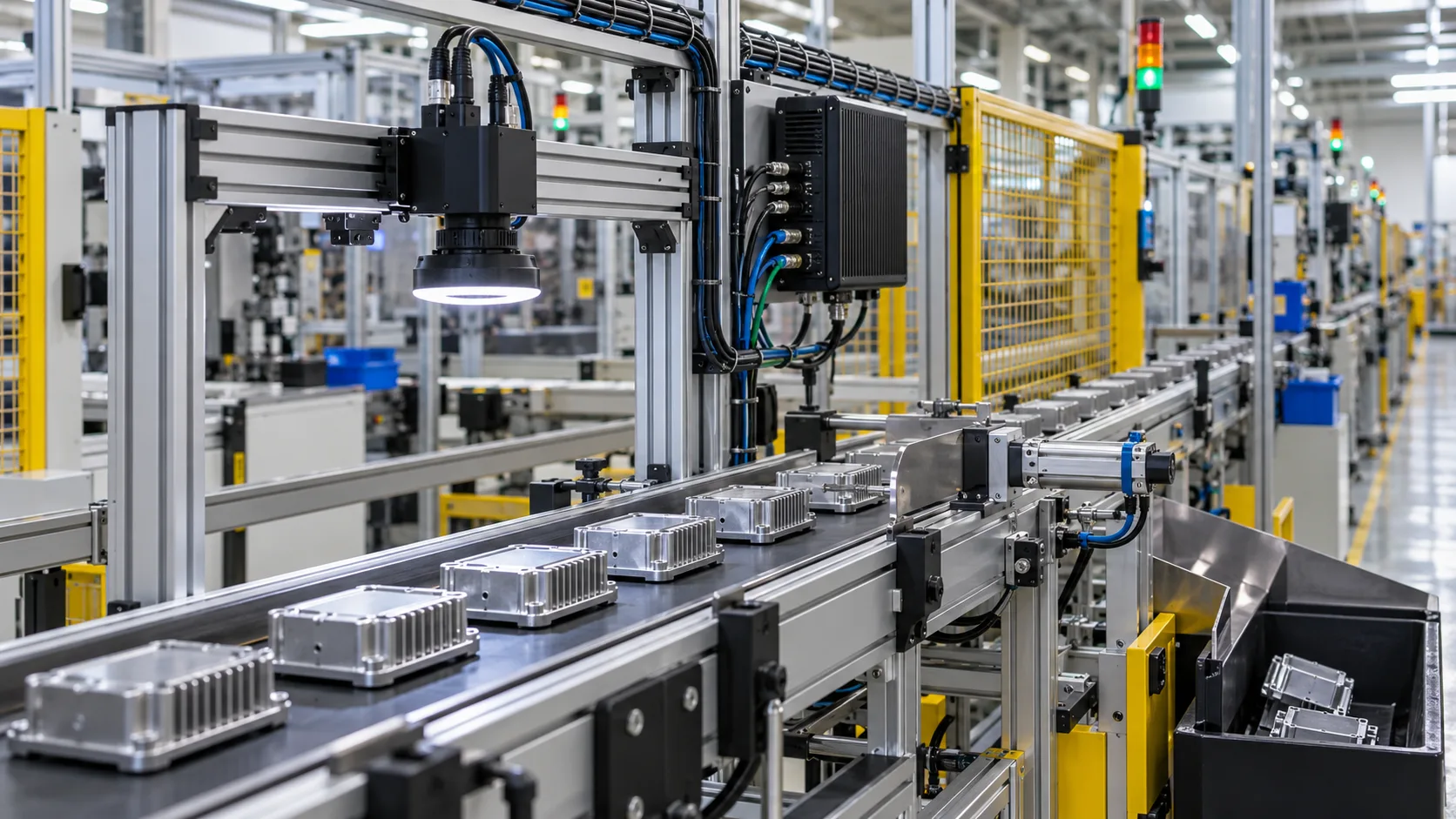
Industrial Visual Inspection
Fanless edge IPCs provide real-time inspection verdicts locally, while high catch rates require retraining with line defect samples.
 Scenario
Fanless edge IPCs provide real-time inspection verdicts locally, while high catch rates require retraining with line defect samples.
 Scenario
LoRaWAN sensors mount on the wall, one gateway connects existing Modbus and BACnet equipment, and the data goes to an open-source dashboard or your own platform.
 Reference design
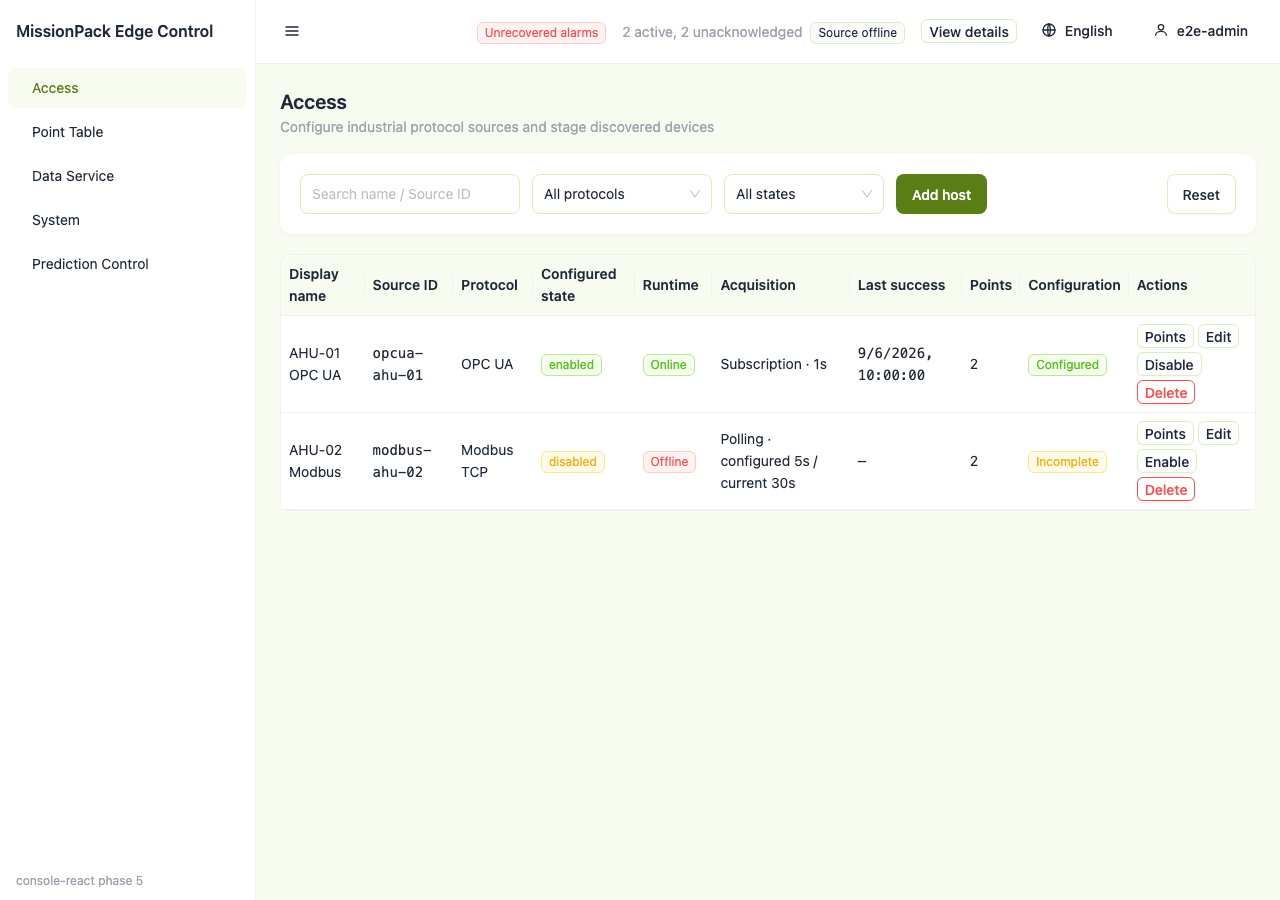
Bring OPC UA, Modbus, BACnet/IP, and MQTT devices into one point model, then read and control them through one MQTT interface.
 Reference design
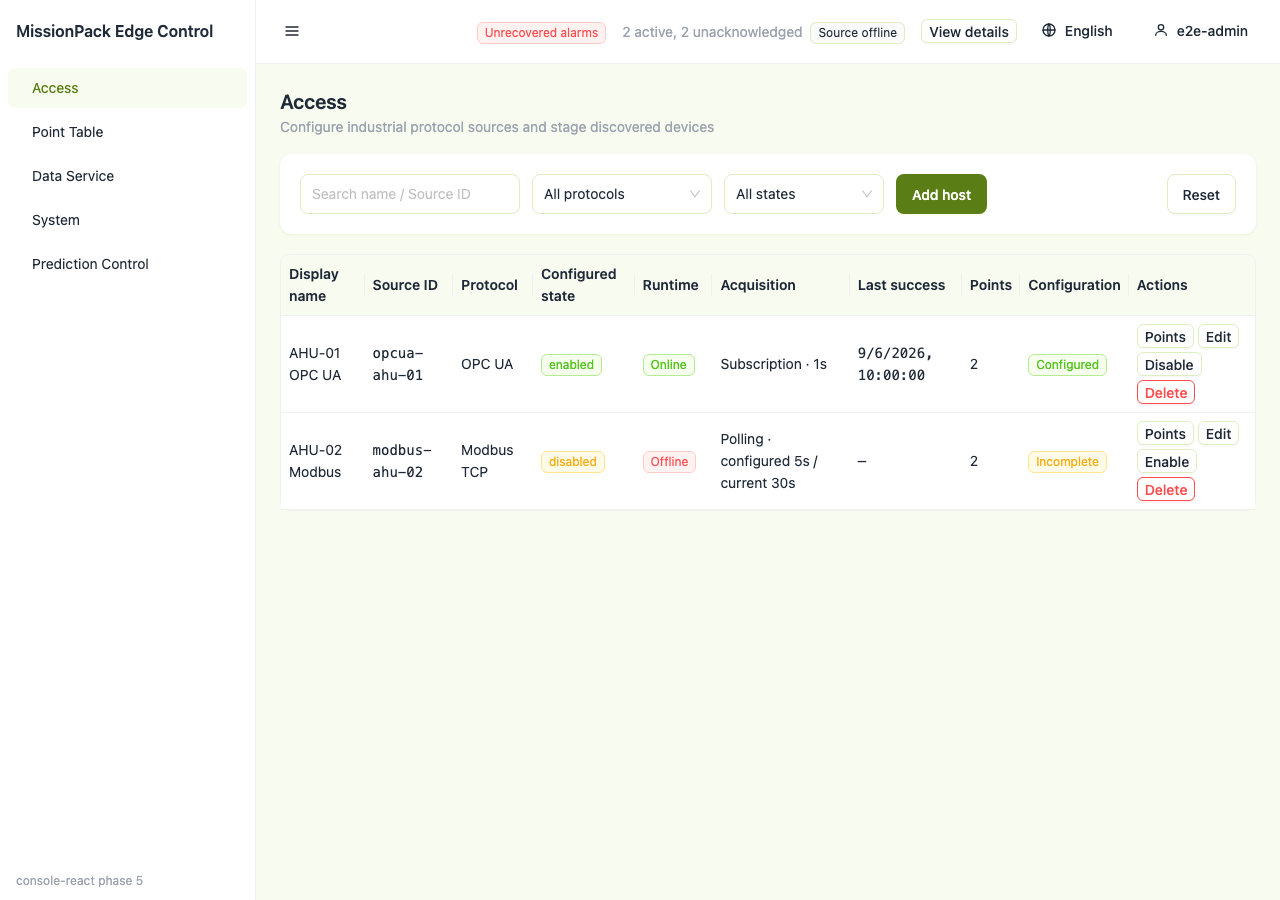
Bring HVAC controller points and an energy meter into one point model, predict setpoints from the building's own history, and write them back only after a readback from the field matches — with rollback and alarms when it does not.
Use field data loggers where devices are scattered and a gateway host where wiring is centralised; the SCADA dashboard runs on a reTerminal touch terminal.
Not sure which to choose? See the full selection guide →
Which interface do the devices you are connecting mainly use?
The Field Data Loggers and Gateway Hosts tabs cover the acquisition column, and SCADA Dashboard covers the touch terminal on the right. LoRaWAN loggers report through a LoRaWAN gateway, 4G loggers through the carrier base station, and the gateway host over Ethernet, all into one data server deployed in the cloud or on a reComputer on-premises server running Home Assistant.
Core Advantages
| Image | Product | Field I/O | Best For |
|---|---|---|---|
 | S2100 Data Logger | RS-485, analog, GPIO → LoRaWAN | Scattered meters with a LoRaWAN gateway on site |
 | Sensor Hub 4G Data Logger | RS-485 (Modbus RTU), analog → 4G | Isolated points, no gateway or LAN |
S2100 turns a single RS-485 or analog device into a LoRaWAN node and needs a LoRaWAN gateway such as the R1225. Sensor Hub 4G collects RS-485 (Modbus RTU) data and sends it directly over 4G, with no gateway on site.
Core Advantages
| Image | Product | Field I/O | Best For |
|---|---|---|---|
 | reComputer R1000 Series | RS-485, Ethernet | Wired meters and Modbus devices |
 | reComputer R1100 Series | RS-485, RS-232, DI/DO, Gigabit Ethernet | Legacy RS-232 devices and dry contacts |
 | reComputer R1225 Gateway Series | RS-485, Gigabit Ethernet, LoRaWAN (EU868 / US915) | Sites that also run LoRaWAN sensors |
 | reComputer Industrial R21 Series | RS-485, RS-232, CAN FD, DI/DO, Gigabit Ethernet | CAN devices; Hailo-8 models for on-site AI inference |
reComputer R series units run Linux and can host local applications such as Node-RED and Home Assistant. The four series differ in field interfaces: R1000 for RS-485 and Ethernet only; R1100 for legacy RS-232 devices or dry contacts; R1225 when the site also has LoRaWAN wireless sensors; the Industrial R21 series for CAN devices or on-site AI inference.
Core Advantages
| Image | Product | Field I/O | Best For |
|---|---|---|---|
 | reTerminal DM Series | RS-485, CAN, Ethernet | Machine operator panel and on-site dashboard |
reTerminal DM is a 10.1-inch touch terminal that reads the data server and serves as the on-site SCADA dashboard. With RS-485 and CAN on board it can also connect to devices directly as HMI and protocol gateway; the multi-protocol gateway reference design supports setup and daily operation on its built-in touch screen.
Core Advantages
The multi-protocol industrial gateway reference design brings OPC UA, Modbus TCP, Modbus RTU, BACnet/IP and MQTT into one point model and exposes one MQTT read/write interface. reTerminal DM and the reComputer Industrial R21 series also have on-board CAN.
Yes. The Seeed Wiki has a Node-RED tutorial for connecting a reComputer R1000 to Siemens PLCs over the S7 protocol.
Yes. The reComputer R1000 has Wiki tutorials for Node-RED with Modbus TCP, MQTT and an OPC UA server, plus Home Assistant and Grafana; reTerminal DM has Node-RED getting-started and CAN tutorials.
No. These gateways and reference designs are not safety-certified control systems; safety interlocks stay with the PLC or safety relays.
They can be evaluated as a customization project, for example adding I/O, changing the enclosure, adjusting the screen specification or preinstalling software. See Customization Service for scope and process, or .


 R1000 Docs