 Scenario
Campus Safety Management
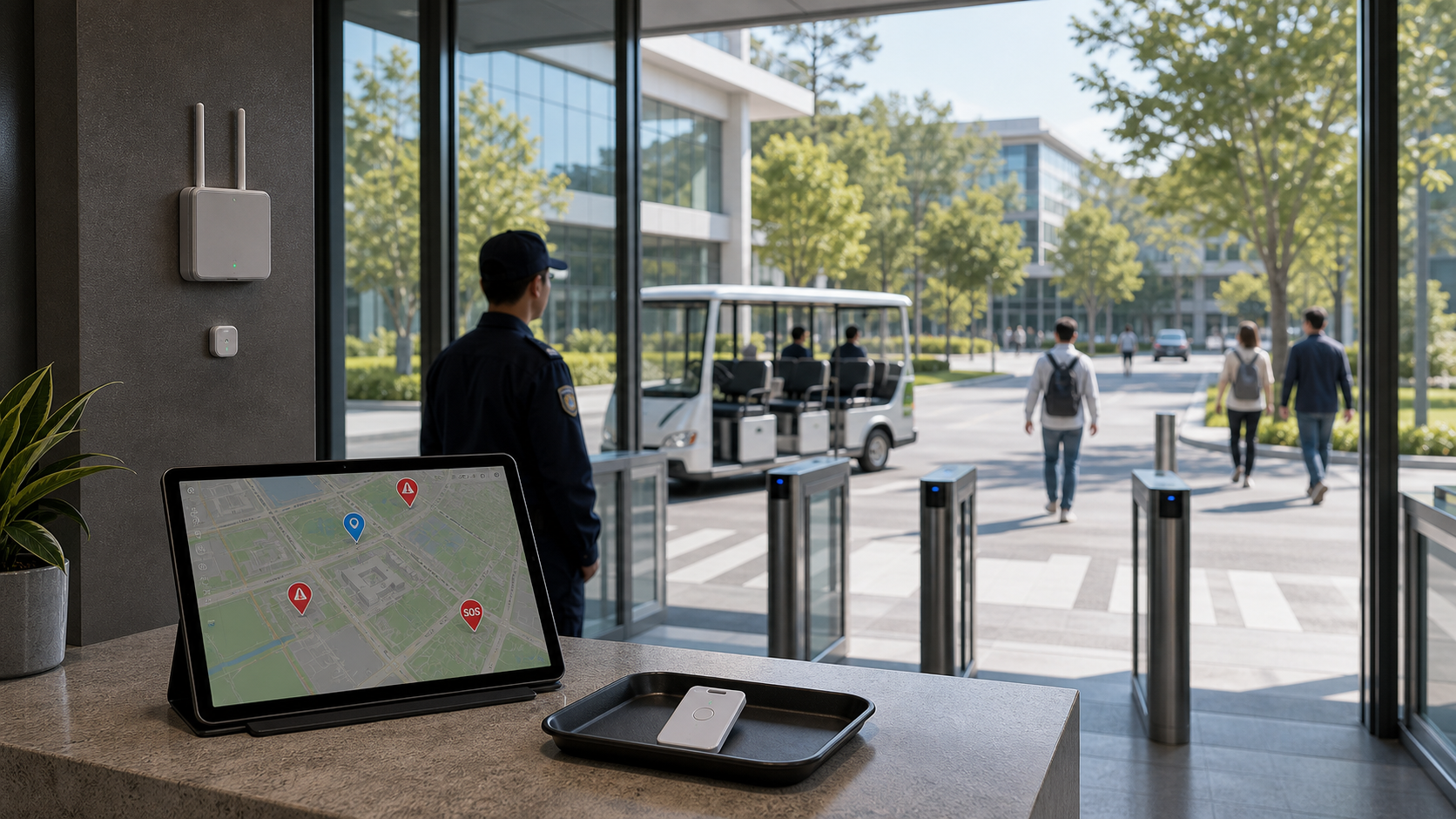
An easy-to-deploy campus safety solution: tags handle personnel location and SOS alerts, while edge AI analyzes video anomalies and connects events to existing security platforms.
 Scenario
An easy-to-deploy campus safety solution: tags handle personnel location and SOS alerts, while edge AI analyzes video anomalies and connects events to existing security platforms.
 Scenario
Collect field microclimate, soil, and traceability data. Choose sensors and gateways by monitoring target, network, and power conditions to support irrigation, inspections, and batch records.
 Scenario
A post-disaster data and device-management solution: build a local network first, then choose 4G, satellite, or another available link for backhaul.
 Reference design
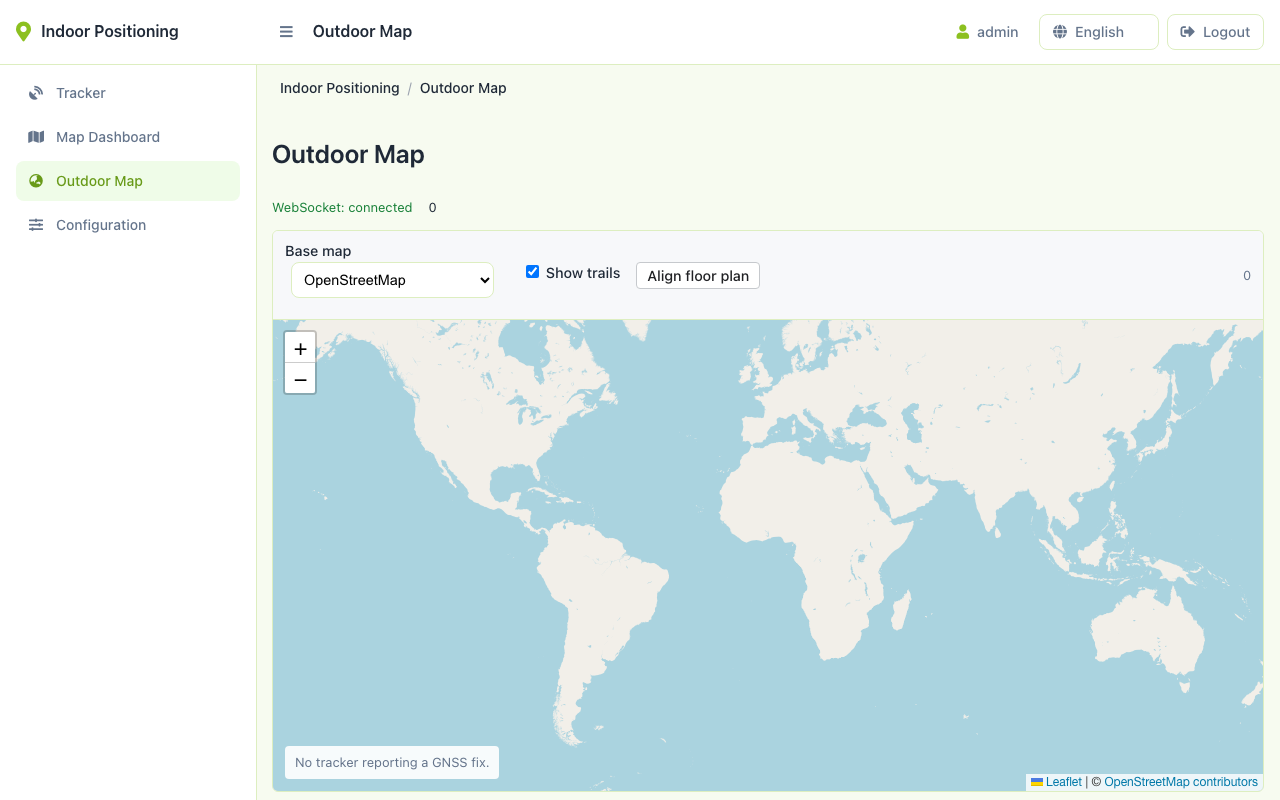
Track assets and people indoors and outdoors on one map — BLE beacons inside, GNSS outside, with floor-plan georeferencing, geofence alarms and an offline basemap option.
Answer five questions (what to track, coverage area, vehicle power, tracker count, number of indoor zones) and the configurator returns a device list. Architecture and the device catalog are in the cards below.
Not sure which to choose? See the full selection guide →
What do you need to track?
Trackers sit at the device layer, BLE beacons and LoRaWAN gateways at the transport layer, and your platform at the application layer. T1000 is worn by people and raises SOS; T2000-A / T2000-C track vehicles and assets. Indoors, BLE beacons give the zone; outdoors, GNSS and Wi-Fi give the location.
Core Advantages
| Image | Product | Use Case |
|---|---|---|
 | Card Tracker T1000-A | Safety badge, GNSS/WiFi/BLE/Buzzer/SOS, with built-in sensors |
 | Asset Tracker T2000-A | 8000 mAh primary battery, GNSS + BLE, ATEX / IP67 / tamper alert |
 | BC03 Indoor Bluetooth Beacon for Tracker | Indoor BLE beacon, battery life over 5 years |
 | Indoor Gateway(SX1302) | LoRaWAN indoor gateway, band by deployment country |
Core hardware: T1000 for personnel badges, T2000-A/C for vehicles & assets, BC03 for indoor reference. The LoRaWAN band depends on your country (e.g. EU 868, Americas 915) — we'll confirm it with you before you order. For outdoor reference points, pair with the BC02 Outdoor BLE Beacon (IP68 / IK08; see the store page).
Core Advantages
Battery life depends on the reporting interval: the more often it reports, the shorter it lasts, and the interval is adjustable on the platform. Indoor BC03 beacons have a battery life of over 5 years (Seeed Wiki).
Indoors it follows beacon layout: metre-level positioning uses 3 BC03 beacons per zone (trilateration) for about 2–3 m; if you only need to know which room someone is in, 1 per zone is enough. The accuracy figures are nominal from beacon layout practice and datasheets, not measurements of this solution. Outdoors, satellite positioning (GNSS) with Wi-Fi assistance.
The solution reports only locations and SOS events; it captures no audio or video. Data returns through your own LoRaWAN gateway and can be stored on your own platform. Pair it with internal notice and consent procedures, and follow local regulations.
They scale differently. LoRaWAN gateways collect data over a nominal 2 km line of sight and carry a nominal 100–200 trackers each, so one or two cover a typical campus. BC03 Bluetooth beacons are the indoor reference: metre-level positioning uses 3 per zone (trilateration), and 1 per zone is enough if you only need the room, mounted at a nominal 2.5–3 m and spaced 5–10 m. Outdoor areas covered by satellite positioning need no beacons. Beacons are battery powered with no cabling.
SOS events carry identity and location, return through the LoRaWAN gateway to the platform, and can be pushed to a security-center screen, nurse station or on-duty staff system. The application ingests uplinks from SenseCAP OpenStream or a ChirpStack MQTT topic and connects to your existing security or dispatch system.
Yes; choose the right LoRaWAN band when ordering. Countries use different bands (EU868, US915, AU915, AS923, IN865 and others), each a different SKU of the same device, and trackers and gateways must match. For oil-and-gas or mining sites, you can choose the ATEX certified (IP67) T2000-A / T2000-B.
Yes. The Seeed devices used in this solution can be customized with your own logo, enclosure, packaging and pre-loaded firmware, and existing models can be adapted to add or drop interfaces and features. See Customization Service for scope and process, or .
All three run on a disposable battery and are IP67 rated. T2000-A is the base model with GNSS + BLE, an 8000 mAh battery, and ATEX certification. T2000-B adds Wi-Fi scanning on top, with the same 8000 mAh battery and ATEX certification. T2000-C swaps in a 0.5 W solar panel plus a 4000 mAh battery for long-term, maintenance-free outdoor assets, and the Seeed Wiki does not list ATEX certification for it. (Seeed Wiki)
 Docs
Docs